What is retrofitting, and why does it matter?
Ask most people what makes a building sustainable, and they'll talk about solar panels or a new low-energy heating system. That matters. But the biggest decision comes earlier, and it's simpler: whether to knock the building down at all.
Retrofit means upgrading an existing building rather than demolishing it and starting again.
Covering everything from improving a building’s performance, energy use, and carbon footprint, to reconfiguring how the space works for the people using it.
The building stays. Almost everything else can change.
Why it's become the industry's central question.
Around 80% of the buildings that will be in use in 2050 have already been built. That single statistic reframes the whole sustainability conversation. We can't construct our way to net zero, because most of the buildings we'll be living and working in already exist.
The problem isn't what we build next. It's what we do with what's already here.
The UK's building stock is old, inefficient, and enormous. Replacing it isn't feasible, not on cost and certainly not on carbon. The main question facing most building owners isn't whether to build something better; it's how to make what they've got perform.
The Carbon Argument.
This is where retrofit becomes more than a pragmatic choice.
Every building has carbon locked into it: the emissions from making and transporting the materials, and from putting them up. This is embodied carbon, and it's already spent. You can't recover it.
Demolishing a building doesn't just waste the structure; it wastes every tonne of carbon that went into making it and then requires a fresh wave of emissions to build the replacement.
Concrete is the worst offender, with steel trailing not far behind. A new building, however efficient it is to run, arrives with decades of emissions already behind it before anyone walks through the door. As buildings get better at operating cleanly, embodied carbon becomes the larger share of the problem, and the harder one to solve.
Retrofit sidesteps that. Keep the structure, and you keep the carbon investment that's already been made.
What Retrofit Actually Involves.
It's rarely just one thing.
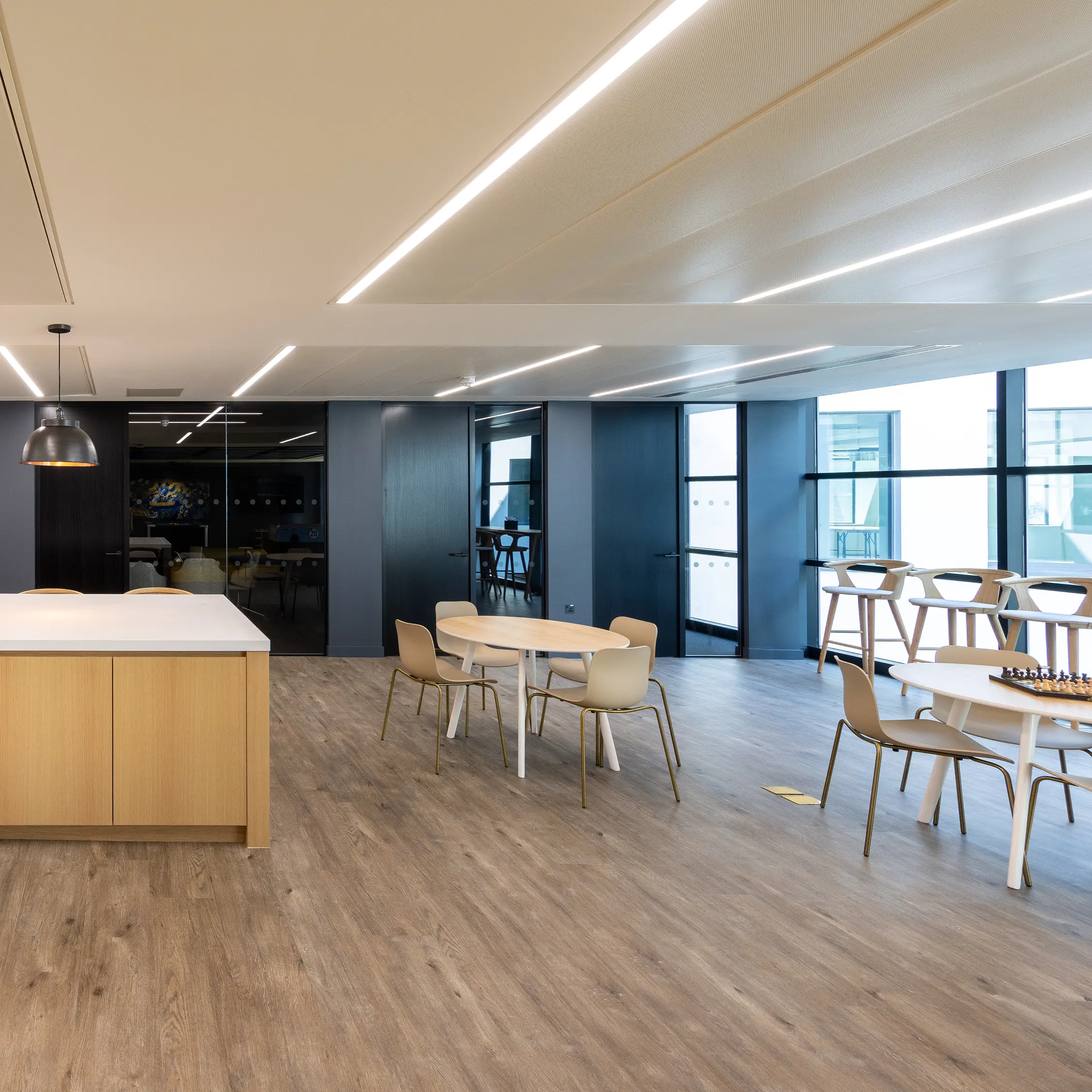
A retrofit might include upgrading the building so it wastes less energy. It might mean stripping out and replacing services entirely. Often, it means reconfiguring layouts so the space suits how people work now rather than how they worked when it was built, with the addition of remote and flexible options, hot-desks, and a general shift from individual desks to communal hubs that focus on collaboration.
Usually it’s a combination, alongside decisions about what to keep. Existing joinery and raised floors can be reworked rather than skipped and replaced. That’s carbon and cost saved in the same move.
Why It’s Harder than New Build.
Retrofit has a reputation for being the easier option. It isn't.
A new building starts from a blank site with known conditions. An existing one brings surprises that no survey can predict. Structures behave in ways the original drawings don't explain. Services run where nobody expected them to. Constraints emerge mid-project that would never show on a clear site.
That unpredictability is exactly why retrofit rewards specialists. Working with an existing building means designing around what you find, not just what you planned for, without sacrificing the quality of the outcome.
The Case for Keeping Buildings.
There's a line often quoted in sustainable design: the greenest building is the one that already exists. It's become a saying because it's broadly true. The lowest carbon material is the one you never had to manufacture.
When done well, retrofitting cuts energy use and running costs while extending a building’s usable life. It keeps a building relevant to how people want to use the space, without the waste and emissions of starting over.
Done well, retrofitting cuts energy use and running costs while extending a building's usable life. It keeps a building relevant to how people actually want to use space, without the waste of starting over. It also tends to produce buildings with more character than their replacements, because the existing fabric brings something a new build has to invent from scratch.
At able, retrofit and adaptive reuse sit at the center of what we do. Not as a sustainability add-on, but as the starting assumption: work out what the existing building can become before considering whether it should go.
Thinking about the future of a building you own or occupy? Get in touch.